
Here’s a provocative question: Is intelligence overrated? Especially when it comes to leadership and fundraising?
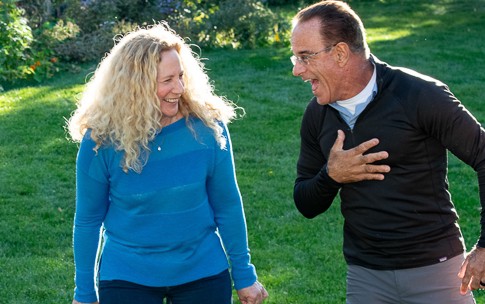
David and Margaret have both been noodling about this concept lately — about what happens from trying too hard or overcompensating.
Both have been writing on it from different angles on LinkedIn (see Margaret’s recent post here and David’s article here) and are prepared to answer: intelligence might just be overrated.
“Too Intelligent” To Raise Money?
Margaret thinks the need to seem smart might be one of the most slippery fundraising traps people fall into.
What it looks like is: the tendency to walk into donor meetings with an all-in approach to appearing smart. These fundraisers lean hard into credentials and analytical expertise, arriving with every metric, statistic and canned story they can remember. They are hoping to impress.
The result, as both hosts agree, is that they show up as much less than their full selves. They turn the meeting into the opposite of connection — and ultimately, the opposite of results.
Sabotaging Our Full Selves
To be clear, our hosts are NOT suggesting that you dumb down. Rather, they are suggesting that we are much more than only our intelligence.
Many of us are experts at sabotaging connection — especially when we care overly about seeming like the smartest person in the room.
David frames this through the lens of what he calls the “hyper-rational saboteur” from the Positive Intelligence Program — a pattern of over-relying on left-brain, analytical thinking at the expense of warmth, intuition, and emotional intelligence. When combined with the “hyper-achiever” and “stickler” saboteurs, the result is a fundraiser (or leader) who is stiff, scripted, and unable to truly connect.
David believes that there is a paradox here. By trying so hard to look professional, you’re actually being less of a professional — because you’re cutting off much of who you are.
Margaret shares how she long believed she had to choose between being warm and being smart. She believed seeming smart was instead of any other parts of her personality. And she, too, used to believe it was more important.
When she finally stopped suppressing her warmth in professional settings, she became a far more effective fundraiser.
Is Intelligence Overrated … In Leadership and Parenting As Well?
The hosts also explore how this dynamic plays out in leadership more broadly.
When a leader always has to be the smartest person in the room, the impact of overcompensating isn’t great. Often, their team stops contributing. Innovation dies. Brainstorming becomes pointless. Risk-taking disappears.
People start withholding their best thinking because there’s no room for it.
Science backs this up — most decisions are made emotionally and then rationalized. Leaders who ignore the emotional field are working against human nature.
The conversation extends to parenting as well. Margaret shares how she realized she was inadvertently stunting her son’s decision-making ability by always jumping in with answers.
David echoes this, describing how he’s shifted from mentor to coach with his own daughters — resisting the urge to tell them what to do, even when he has an opinion.
So, How Do I Stop Trying So Hard To Be Smart (without seeming unintelligent)?
One of the skills Margaret and David coach is “clearing” — naming what’s on your mind or sharing an experience so that you can stop thinking about it and become present. This can include, in leadership or a fundraising meeting, giving an honest, human answer when someone asks how you’re doing. Even a small, genuine moment of vulnerability, such as “I’m a little wobbly today because…”, can open up the relational space enormously. It can really invite the other person in — in a way that caring only about intelligence won’t do.
A second way to move from only seeming smart to including more authenticity is this a simple exercise: think about how your close friends would describe you when you’re relaxed and fully yourself. When you’re unscripted and engaged. Pick one of those qualities — funny, warm, curious, enthusiastic — and consciously bring it into your next meeting or conversation. Let that be the volume you turn up, rather than the need to impress.
If you are interested in learning more about The BEING of a MEGA Gifts Fundraiser course mentioned in the podcast, you can learn more here.
As David puts it, it’s an invitation to unmask. And for the hyper-achievers listening? Consider this your challenge: if you really want to achieve more, try showing up as more of yourself.